The control of growth and homeostasis
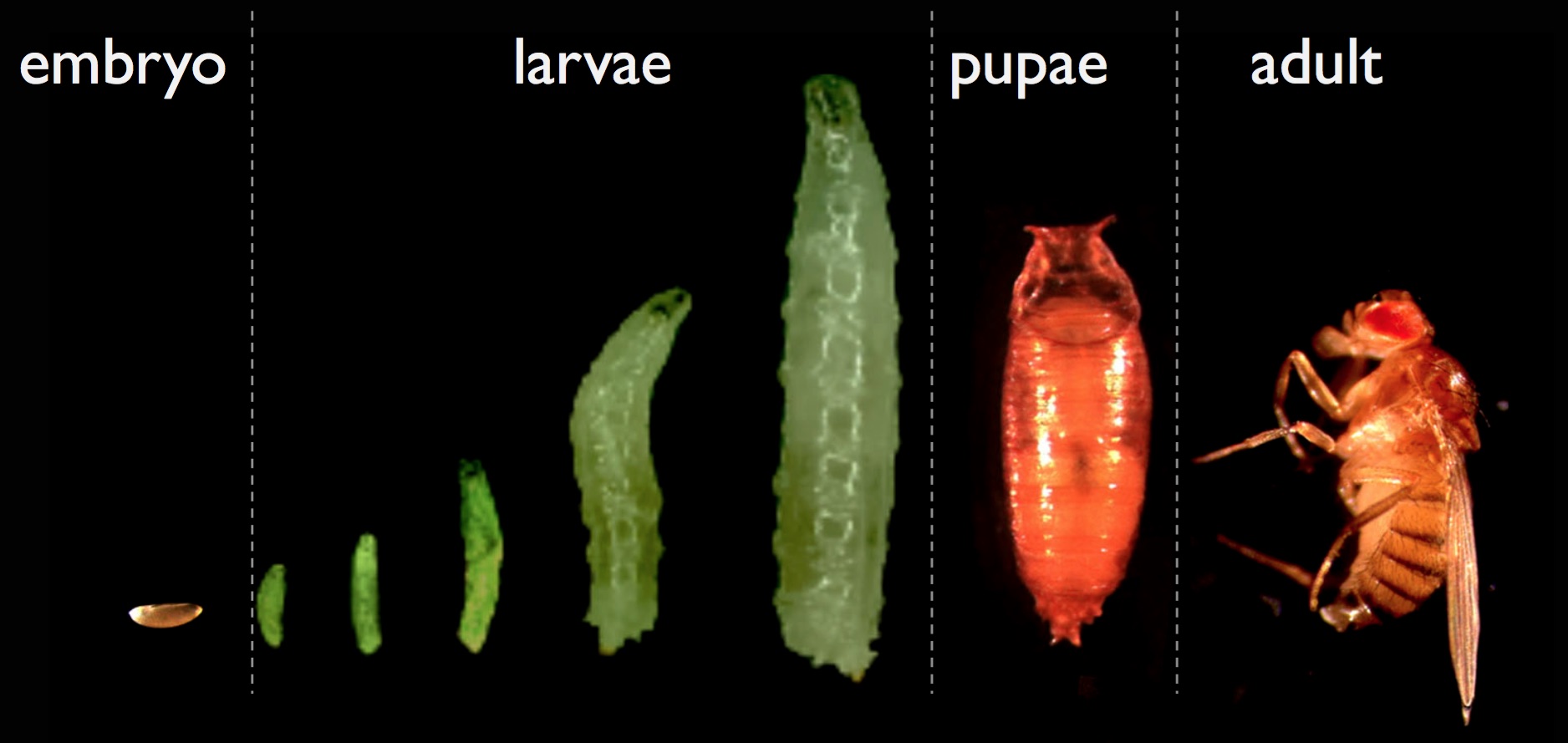
Our lab studies the control of growth and homestasis using Drosophila as a model system. We use a combination of molecular and genetic approaches to investigate the cell-cell signalling pathways and the genetic mechanisms that govern how cell, tissue and body growth are controlled.
Developmental and environmental signals determine larval body growth
During the four-day Drosophila larval period, animals increase in mass almost 200-fold. This dramatic growth mostly occurs in non-dividing polyploid cells that make up the bulk of the larval organs. Since neither pupae nor adults grow, final body size is determined by growth during the larval period. The versatility of the Drosophila genetic toolkit allows us to ‘turn on’ or ‘turn off’ genes at any time or in any place (cells, tissues, whole body) during development, making Drosophila larvae an excellent model system with which to study the control of growth
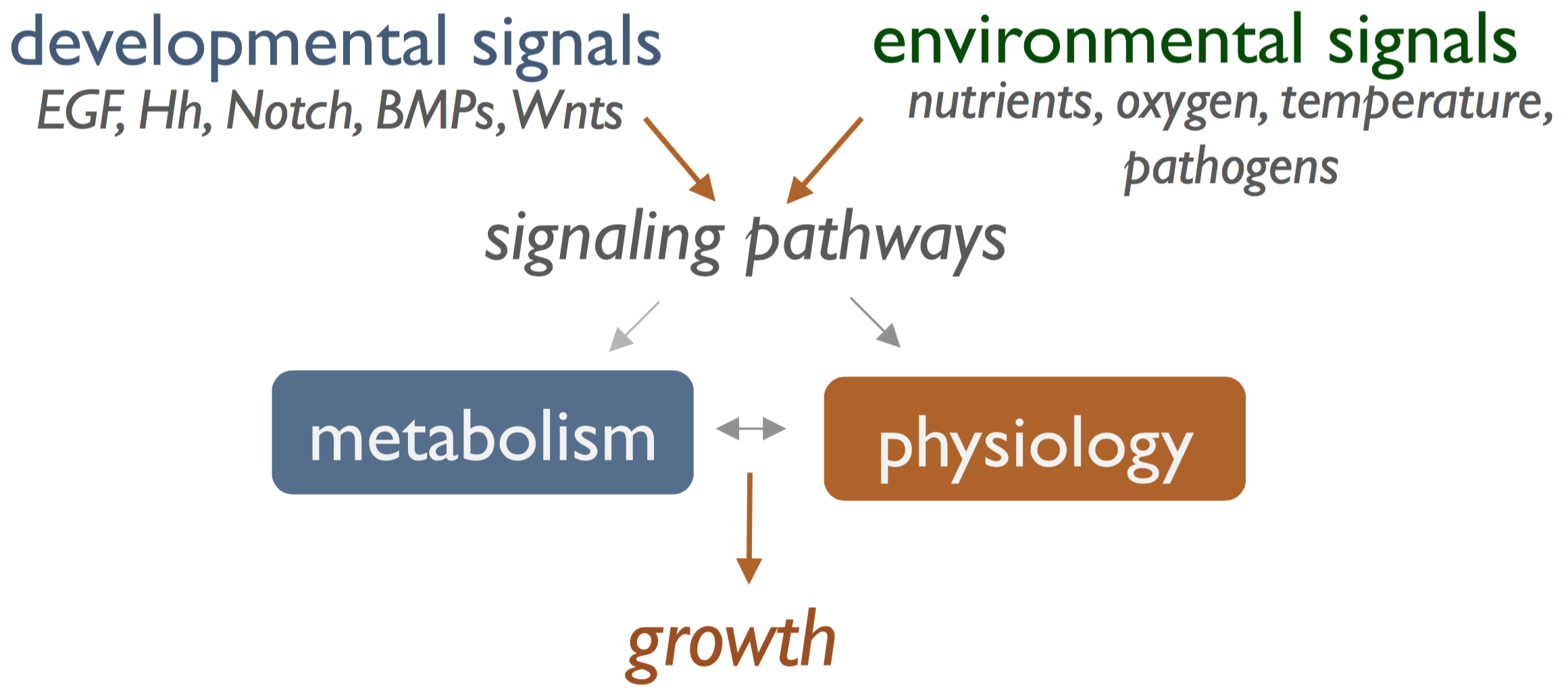
Growth is generally controlled by developmental and environmental signals. During development, several conserved families of cell-cell signalling pathways (e.g. Wnts, Hedgehog, Notch, BMPs and receptor tyrosine kinase signalling) can regulate organ size by controlling cell growth, proliferation and survival. In addition, many environmental factors (e.g. nutrient abundance, oxygen and temperature levels, and pathogens) can influence animal growth and body size. Animals often live in conditions where these factors fluctuate. As they develop, they must therefore coordinate their metabolism with their changing environment to properly regulate their growth.
A goal of our lab is to understand how these developmental and environmental signals regulate metabolism and physiology to control cell, tissue and body growth during the larval period. We also explore how adult flies adapt their metabolism and physiology in response to changes in these environmental cues to maintain tissue and whole-body homeostasis and viability

